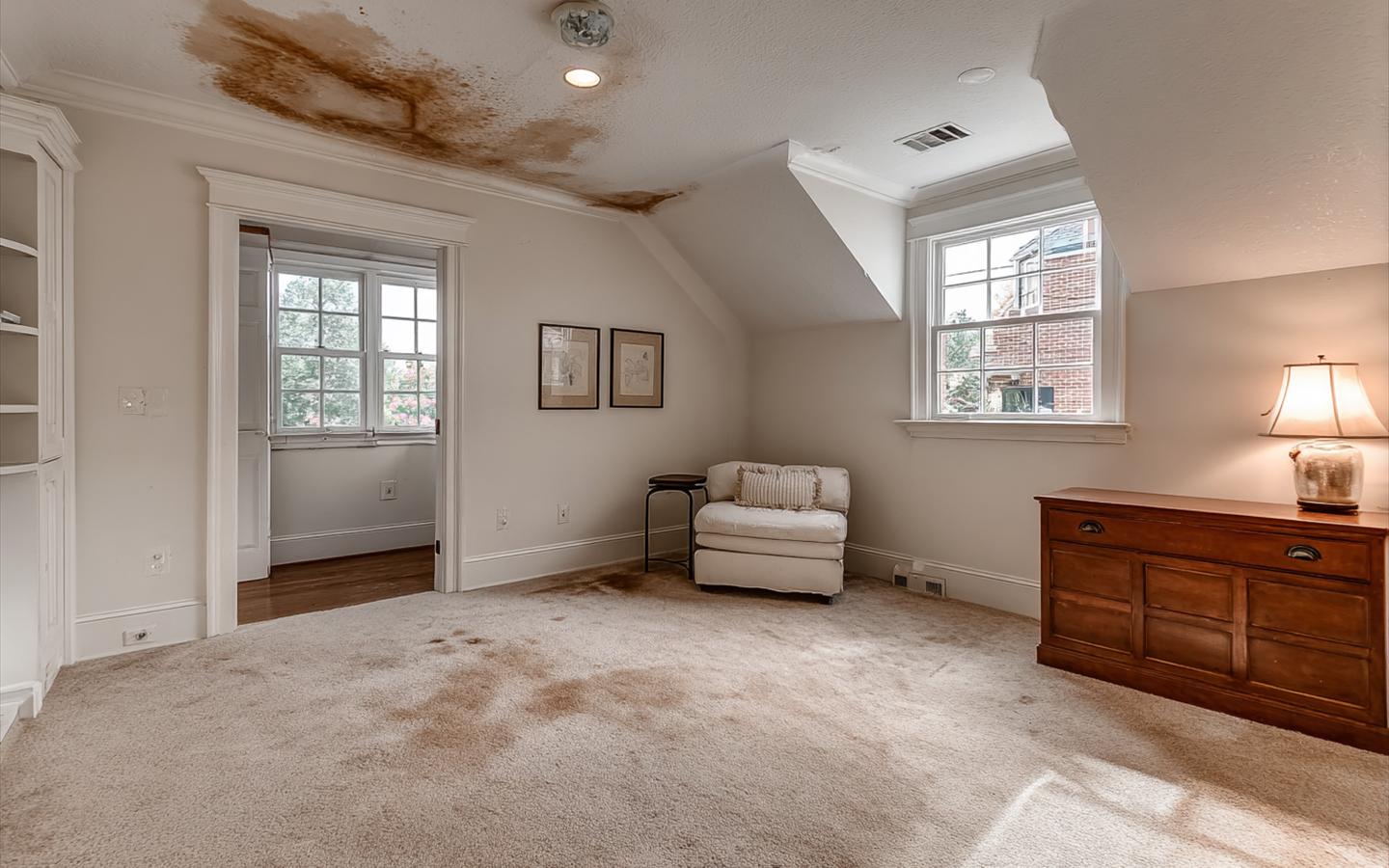
The case: a stain on the garage ceiling, right under the bonus room. Nobody uses the bonus room much in winter, the carpet looks fine, and the stain has been growing for a while. On the plateau, the room over a two- or three-car garage is one of the most common places for water damage to start, and one of the last places anyone looks.
Why This Room
A bonus room is built over an unheated space. Its floor sits on joists that span the garage, with insulation between them and the garage ceiling below. The room is often tucked under the roof, with sloped ceilings, dormers and roof valleys meeting just above it. Many plans put a bathroom, a laundry or a kids' bath right next to it. That gives water four ways in:
- From the roof. Valleys, dormers and the joint where the garage roof meets the main house wall are common leak points in heavy rain.
- From a bath or laundry next door. A supply line, a toilet seal or a washer hose can soak the shared floor.
- From cold. Pipes that run through the garage ceiling or the outside walls of the room can freeze in a cold snap.
- From condensation. Warm, damp air from the room meeting cold surfaces in the knee walls and ceiling can collect moisture over a winter.
Why It's Found Late
The stain usually shows up in the garage, not in the room. Water that gets into the bonus room floor runs down to the garage ceiling, which is often unpainted drywall that nobody looks at. By the time it shows, the insulation between the joists may have been soaking for weeks. Carpet on top can look dry while the pad and subfloor underneath are wet at the edges.
Decide: whether anyone has been using the room. If it's closed off, check the carpet edge along each wall with your hand.
What a Company Will Check
- The garage ceiling and the space between the joists, for wet insulation
- The subfloor under the bonus room carpet, especially along the wall shared with a bath
- The knee walls and the space behind them, where the roof slopes down
- The roof valleys and the wall above the garage roof, from outside
- Any pipes running through the garage ceiling
Insulation that's soaked usually comes out, since it holds water and loses most of its value when wet. Drywall on the garage ceiling is often cut open to let the floor system dry from below.
Drying Over a Garage
A garage is cold and damp in a Sammamish winter, so drying from below means closing the garage up and running dehumidifiers in it, or tenting off the section under the room. From above, the carpet may be lifted and the pad replaced. Once the subfloor and joists read dry, the insulation and garage ceiling go back. More on the process: mitigation and drying.
Decide: where the cars go while the garage is being dried.
When It's the Roof
If the water came from the roof, the roof has to be repaired before drying can finish. That's separate work from the restoration, done by whoever you choose for it. The restoration company can still remove wet materials and start drying while you arrange it, as long as the leak is covered or the weather is dry.
HOA Rules
If the roof or anything on the outside of the house is part of the fix, many plateau HOAs have to approve exterior work. See HOA approvals.
Checking the Room Each Season
A quick look twice a year catches most bonus-room leaks early: the garage ceiling under the room, the carpet edge along any wall shared with a bath or laundry, and the knee-wall access panels if the room has them. A flashlight in the knee wall after a heavy storm shows whether the roof is letting water in.
What to Hand to the Company
- Tracing where the water came from: roof, plumbing or condensation
- Removing wet insulation, pad and drywall
- Drying the floor system and recording the readings
- Writing up what's needed to put the room and the garage ceiling back
Around the Plateau
Three-car garages with bonus rooms above are a standard plan in Trossachs and around Beaver Lake. Newer subdivisions in Duvall use the same layout.
U.S. Department of Energy: pipes in exterior walls
Questions
Does wet insulation have to come out?
Usually. Fiberglass that's soaked compresses and doesn't dry well in place, and it keeps the joists wet.
The carpet feels dry. Could the floor still be wet?
Yes. Pad and subfloor can be wet at the edges with dry carpet on top. A moisture meter answers it.
Could this be condensation rather than a leak?
It can be, especially in rooms with cold knee walls. A company can usually tell from where the moisture is and when it appears.

Plateau Cold Snaps and Frozen Pipes
What freezes first when the plateau drops into the teens.
Big-House Plumbing: Two Water Heaters and Long Runs
Recirculation pumps, mechanical rooms and more places for a leak to start.