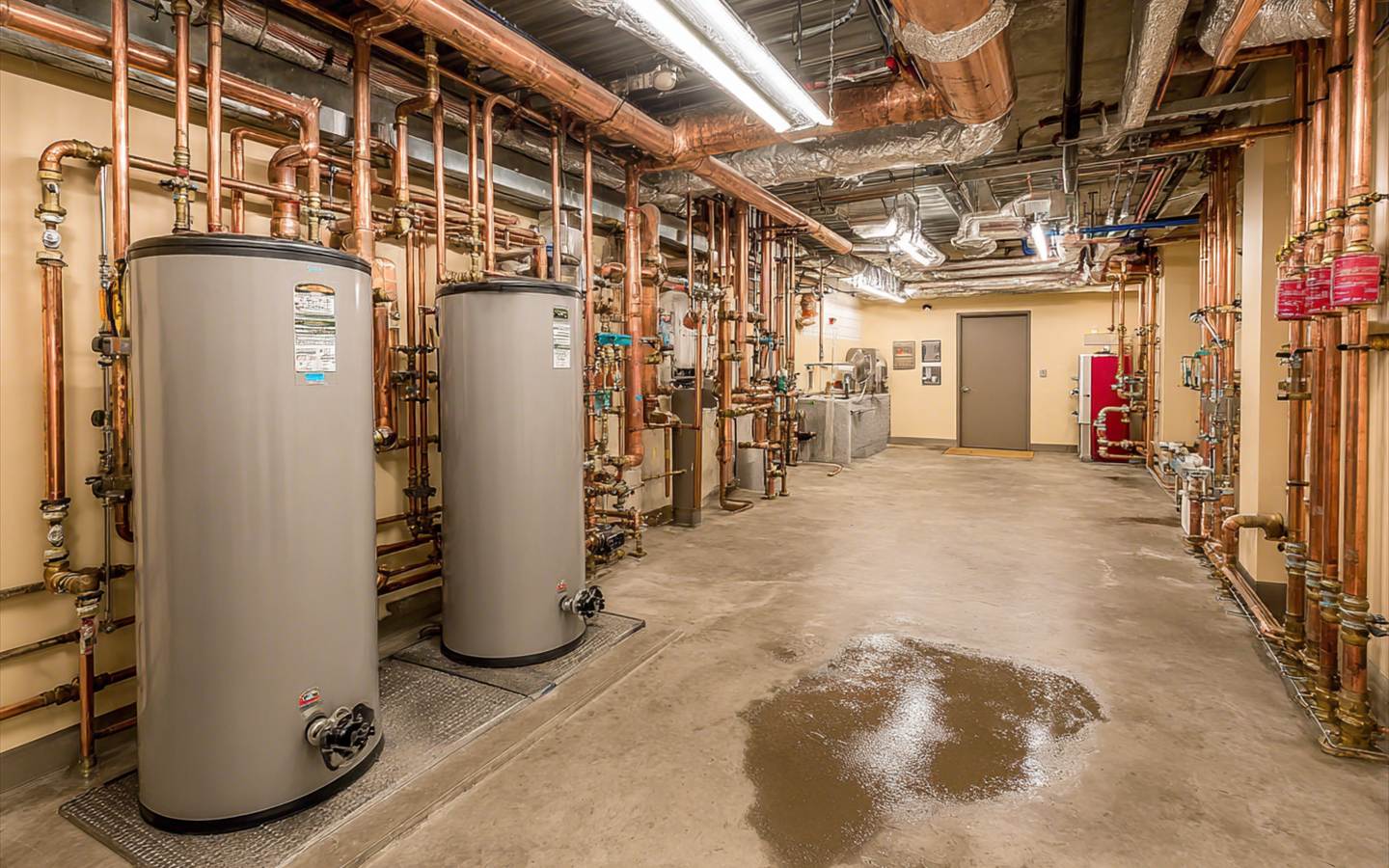
The case: a 4,500-square-foot house with a leak nobody can place. The ceiling over the kitchen has a stain, the mechanical room floor is damp, and the water bill went up last month. Large plateau homes have more plumbing than most houses, spread over more floors and longer distances, so finding where water started is the first job. This piece walks through what's usually in a big house and where it tends to fail.
What a Big House Usually Has
Houses built on the plateau from the late 1990s on often go well past 3,500 square feet. To keep hot water reaching a primary bath at the far end of the second floor, builders add equipment a smaller house doesn't need:
| Equipment | Why it's there | What fails |
|---|---|---|
| Two water heaters | One tank can't keep up with several baths, or one serves each end of the house | Tank bottoms, relief valves, connectors on top |
| A recirculation pump | Keeps hot water moving so taps run hot quickly | Pump seals, check valves, the dedicated return line |
| A water softener or filter | Common with harder water or on wells | Fittings and the drain line |
| An expansion tank | Absorbs pressure in closed systems | The tank's bladder and its connection |
| A long main manifold | Feeds a dozen or more fixtures | Joints along runs hidden in floors and ceilings |
All of this tends to sit together in one mechanical room, often in the garage, a lower level or a closet off the laundry. That makes it easier to check, and it also means one failure can soak finished space next door.
Where Water Shows Up Versus Where It Starts
In a big house, a stain is rarely right under the leak. Water follows joists, ducts and pipes before it comes through a ceiling. A supply line in the floor of a second-story bath can run along a joist bay and appear eight or ten feet away, over the kitchen island. A recirculation line in an exterior wall can leak for weeks before anything shows. Moisture meters and a thermal camera are how a restoration company traces it back.
Decide: whether to shut off the water to the house while you wait, or just to one fixture if you can see where it's coming from.
Water Heaters Come in Pairs
Two tanks mean twice the chances of a tank failing. Most tank water heaters last somewhere around 8 to 12 years, and in a house where both were installed when it was built, they reach that age at the same time. A tank that's rusting at the base, a relief valve that drips into its pan, or a connector that's crusted at the top are signs that it's close. When a tank lets go, it empties 50 gallons or more, and keeps refilling until someone closes the valve.
Recirculation Loops
A recirculation system adds a return pipe that runs from the farthest fixture back to the heater. It's another long pipe through walls and floors, and it carries hot water all day. Leaks on it tend to be slow. Signs include a warm spot on a floor, a wall that feels damp near the bottom, or a pump that runs constantly.
Drying a Big House
Once the source is found and stopped, drying follows the same logic as any house, scaled up. The company maps how far the water went, removes what can't be dried and sets equipment. In large houses, that usually means drying zones sealed off with plastic so dehumidifiers aren't fighting the whole volume of a great room and a two-story entry. More about that on mitigation and drying.
Decide: which rooms the household needs during drying, so the zones can be set around them.
What to Hand to the Company
- Finding the source behind walls and ceilings, with meters and imaging
- The drying plan, zones and equipment counts
- The readings, each visit, until wet areas match dry ones
- The scope for what comes out and what gets rebuilt
What stays with you: getting the plumbing repaired by whoever you choose, talking to your insurer, and deciding how far the rebuild goes.
Keeping It From Happening Again
Many owners, once a big leak is behind them, put the water heaters on a replacement schedule rather than waiting for a failure. Drain pans plumbed to a drain, a leak sensor in the mechanical room and an automatic shutoff on the main are common upgrades. Knowing where the main shutoff is, and making sure everyone in the house can reach it, matters more than any device.
Around the Plateau
Houses with this kind of equipment are common around Aldarra and Trossachs. Older large homes near Sahalee are reaching the age when original tanks and fittings give out. For the whole job, see water damage restoration.
U.S. Department of Energy: residential water heaters
Questions
How do I know which water heater leaked?
Look at both pans and the floor around each tank, and check the connectors on top. If you can't tell, close the cold supply to both until someone looks.
Can a recirculation pump cause water damage?
Yes. The pump itself and the return line can leak, usually slowly, inside a wall or a floor.
Does a bigger house always cost more to dry?
Usually, because more area got wet and more equipment runs. Drying zones help keep it to the part of the house that's actually wet.
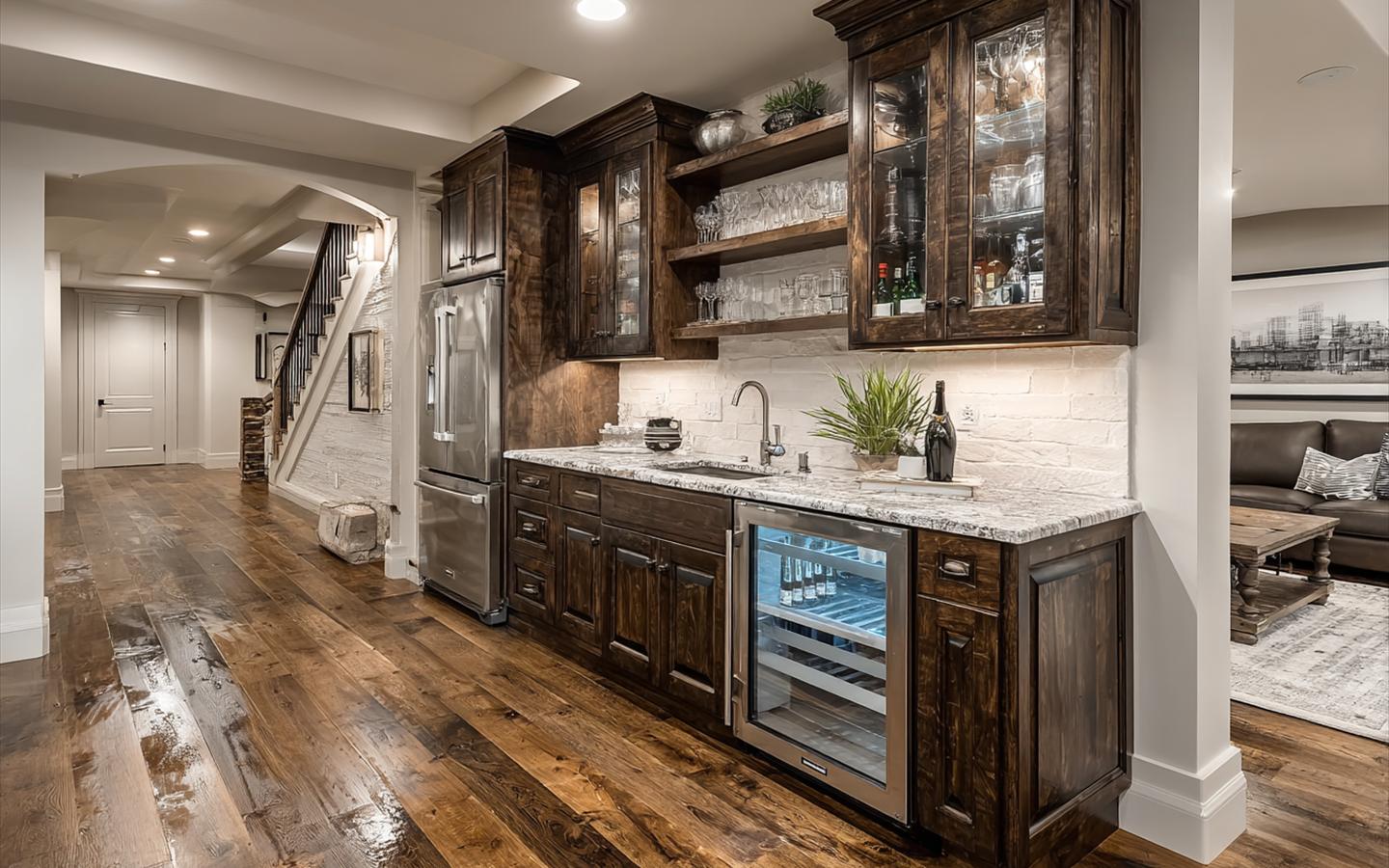
Wet Bars, Ice Makers and Second Kitchens
Small pipes, out of sight, under finished floors.
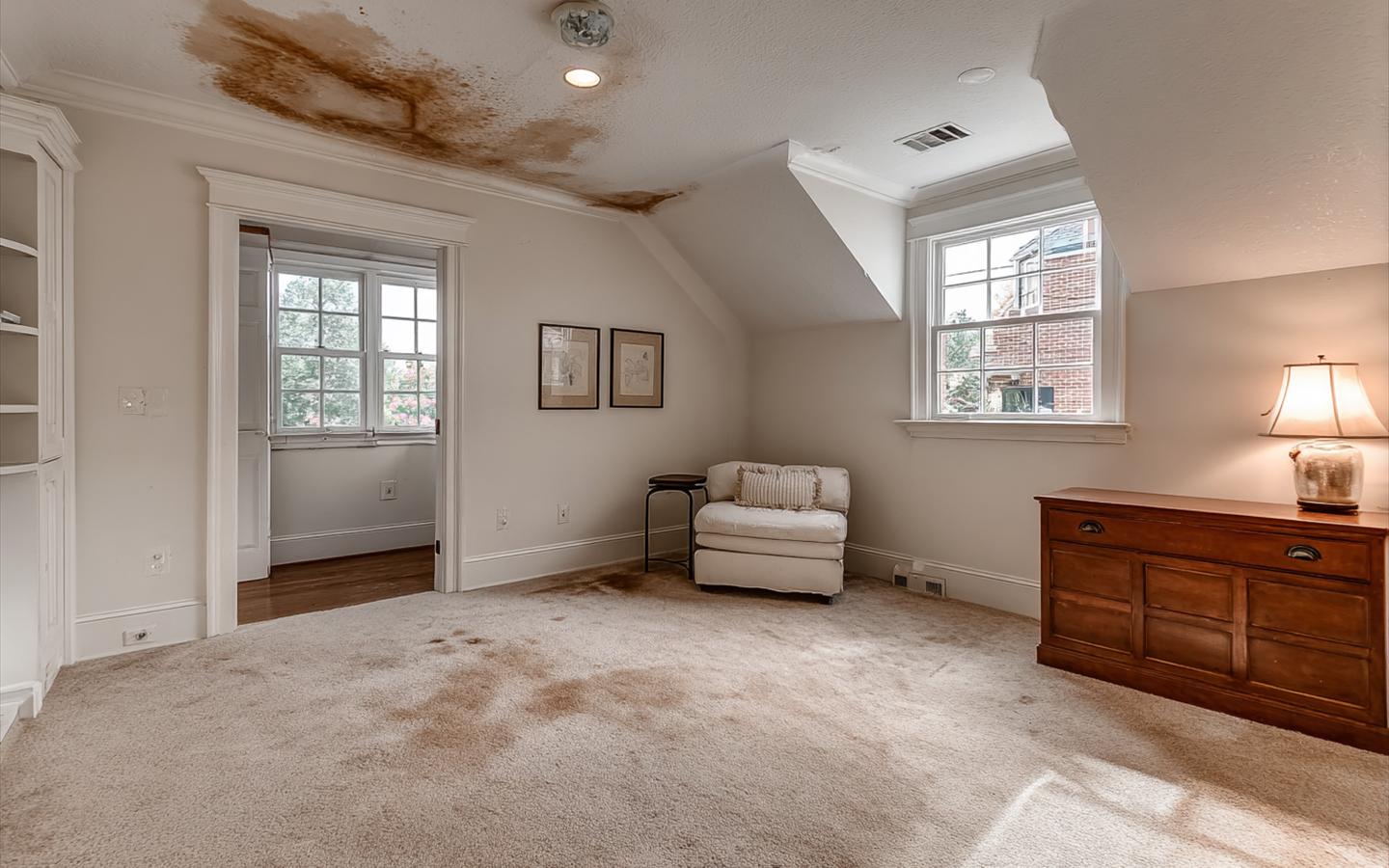
Bonus Rooms Over the Garage: Leaks You Find Late
The room over the cold space, and why water hides there.