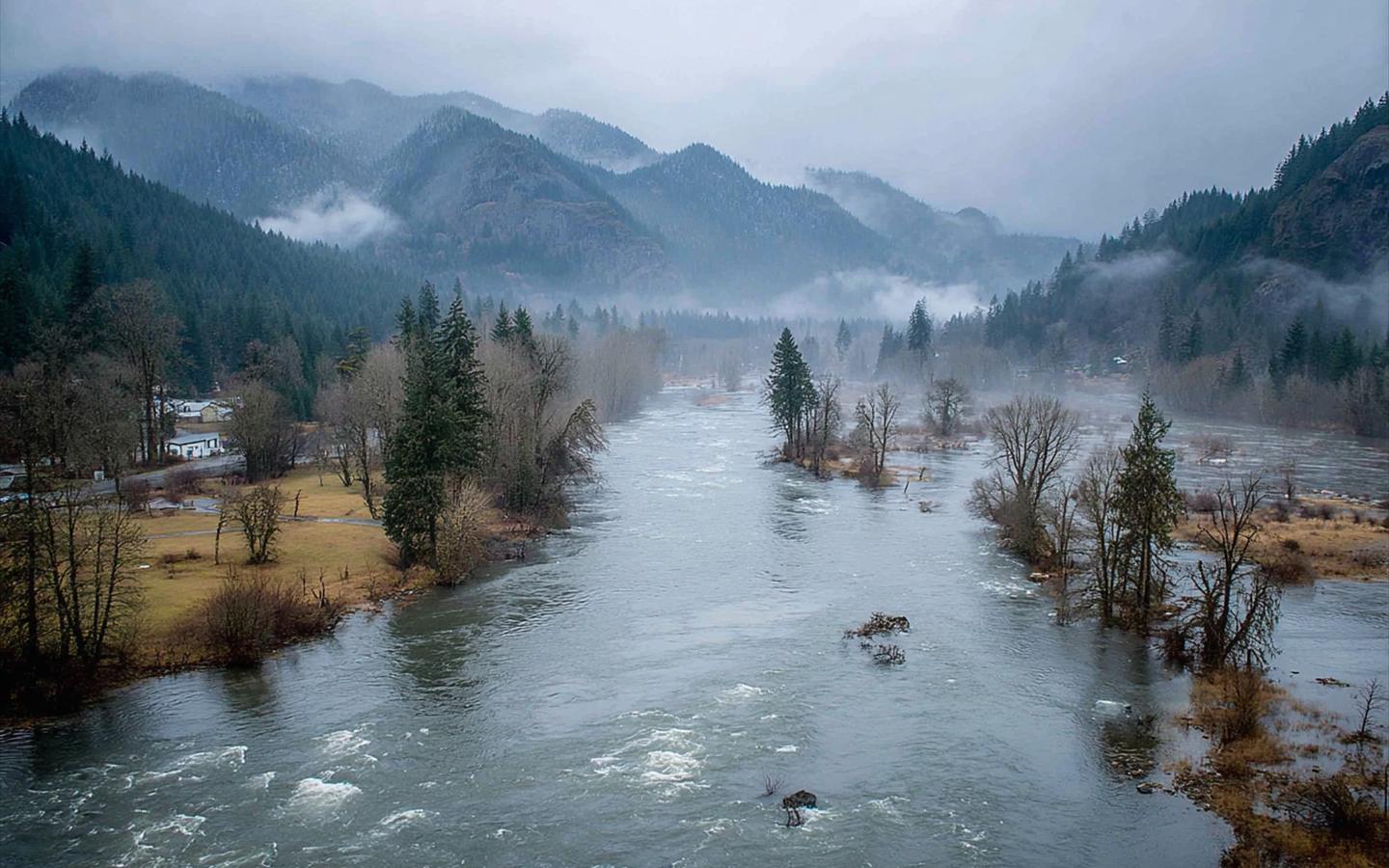
The case: a November storm, rain on snow in the Cascades, and the river over its banks by morning. The Snoqualmie drains a large piece of the mountains east of the plateau, and when warm rain lands on early snow, it rises fast. Fall City, Carnation and Duvall sit beside it, with farmland and roads on the valley floor between them. Most floods here stay on the fields. Some reach houses, garages and outbuildings, and river water in a house is a different job from a broken pipe.
The Carnation Gauge
The National Weather Service tracks the river at a gauge near Carnation, and that reading is the one to watch. Its published stages:
| Stage | Height at the gauge | What it means |
|---|---|---|
| Action | 50.7 ft | The river is rising toward flood |
| Flood | 54 ft | Farmland and several roads flood from Fall City through Carnation and Duvall |
| Moderate | 56 ft | Wider flooding of roads and low-lying property |
| Major | 58 ft | Extensive flooding across the valley |
King County's flood warning center adds its own alert phases for the Snoqualmie based on flow, and tracks the Tolt and the Raging rivers separately. The county can notify you by text or email when phases change.
Decide: whether to sign up for the county's flood alerts before the next storm season.
How Water Gets Into Valley Homes
- Over the ground: floodwater reaches the garage, the crawlspace vents or a low door
- Up through the crawlspace: ground water rises with the river and fills the crawlspace from below
- Into outbuildings: shops, barns and pump houses on low ground often take water first
- Through backed-up drains: where floor drains or septic systems are overwhelmed
Why River Water Is Treated Differently
Floodwater from a river carries soil, farm runoff, fuel and whatever else it crossed. Restoration companies treat it as heavily contaminated. In practice that means:
- Carpet, pad and upholstered items that floodwater touched are usually thrown out
- Drywall is cut well above the water line, and wet insulation comes out
- Hard surfaces are cleaned and treated before drying
- Crews wear protective gear, and children and pets stay away
This is also why the source matters to insurers. Standard homeowner policies usually exclude flood from rising surface water; flood coverage typically comes from a separate flood policy, such as one through the National Flood Insurance Program.
Going Back In
Wait for officials to say it's safe. Don't drive or walk through floodwater on valley roads; it's deeper and faster than it looks. Before entering the house, make sure the power is off at the panel or by the utility if water reached outlets or the panel. Photograph everything, inside and out, including the high-water mark on the walls.
Decide: whether the house needs an electrician to look at it before power goes back on.
After the Water Drops
Getting the water and mud out quickly matters, because wet materials keep soaking the structure. Pumps come first if water is still standing, then extraction, then removal of what can't be saved, then drying. If the house is on a well, the well may need to be checked and tested before anyone drinks from it. See valley wells.
Getting Help to the Valley
When the river is up, some valley roads close, and crews coming from the plateau may need another route. Tell the company which roads are open from your side. Expect a wait during a big flood, when many houses need help at once.
Before the Next Flood Season
Owners in the floodplain often keep valuables and papers off the lowest floor from October on, move vehicles and equipment to higher ground when alerts reach the minor flooding phase, and photograph the house and its contents each fall so there's a before picture for any claim.
What to Hand to the Company
- Pumping and extraction
- Removing contaminated materials and cleaning
- Drying and readings
- Documentation for a flood or homeowner claim
Around the Valley
Fall City sits where the Raging River comes in. Carnation is where the Tolt meets the Snoqualmie. Duvall is mostly above the floodplain, with the valley roads below it.
King County flood warning center NOAA river gauge: Snoqualmie River near Carnation
Questions
Does homeowner insurance cover river flooding?
Usually not. Flood from rising water is typically covered only by a separate flood policy.
How high does the river have to get to reach houses?
It depends on the property. Flood stage at the Carnation gauge is 54 feet, when farmland and roads start flooding; houses on lower ground can be affected at or above that.
Can anything that got wet be saved?
Hard items often can, after cleaning. Soft, porous materials that floodwater soaked usually can't.
Valley Wells, Pressure Tanks and Pump Houses
The equipment homes on wells depend on, after a freeze or a flood.
Storm Ponds, Bioswales and Big-Lot Drainage
Where subdivision water goes, and when it heads for the house.