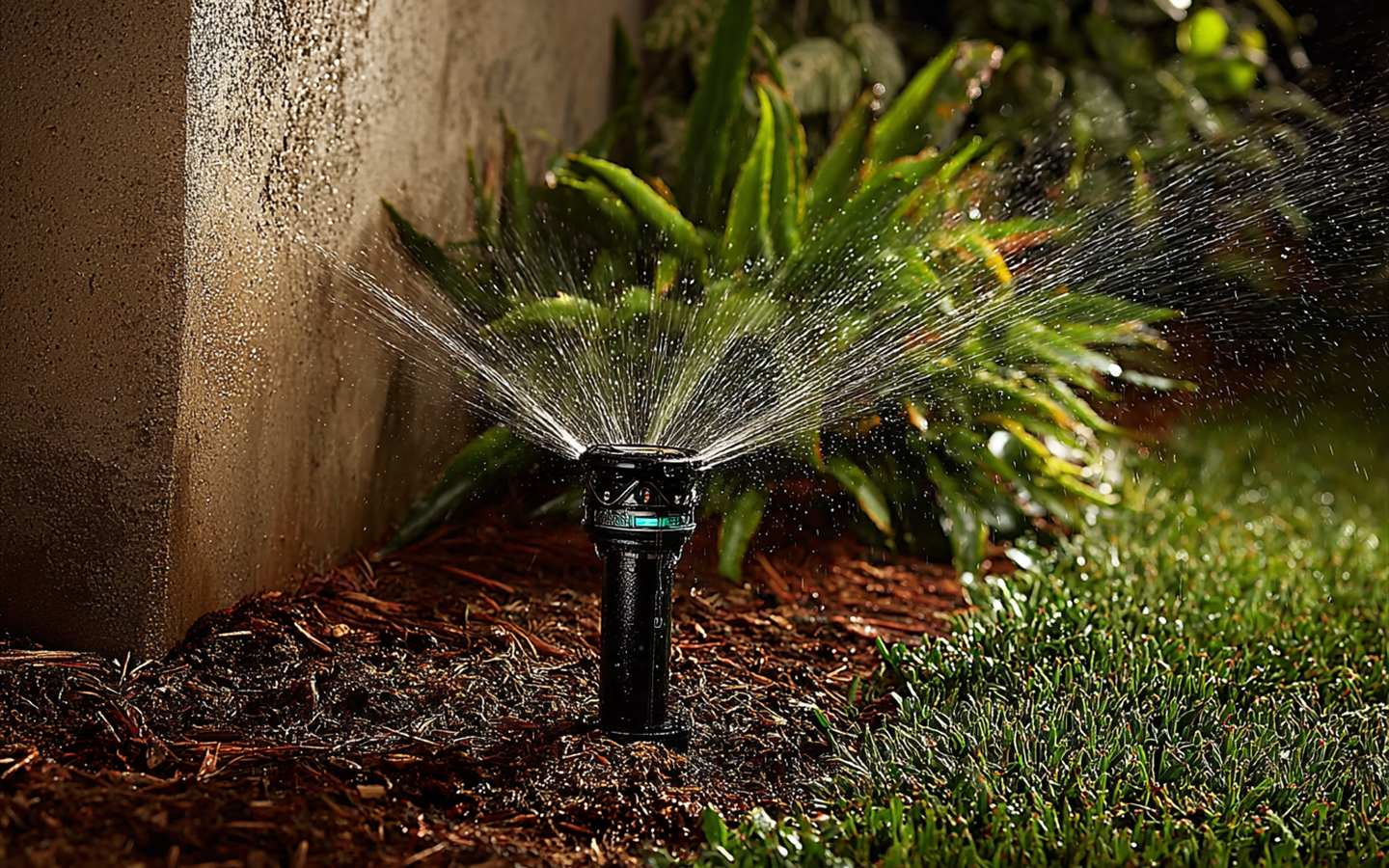
The case: a dry July, and a wet carpet along one lower-level wall. It hasn't rained in weeks, so the owner suspects a pipe. Then someone notices the sprinkler zone on that side of the house runs every morning, and one head is pointed at the siding. Many plateau homes have in-ground irrigation for lawns and beds, and in summer it's often the only water near the foundation.
How Irrigation Water Gets Inside
| What happens | Where it shows up |
|---|---|
| A sprinkler head sprays the wall or a window well | Lower-level wall below it, window well, siding |
| A broken lateral line near the foundation | Soil stays soaked, water seeps through the wall |
| A leaking valve box near the house | A wet patch that never dries |
| Beds watered right against the foundation | Seepage at the wall-floor joint |
| A leaking backflow assembly | Water at the base of an exterior wall |
| Zones that run too long on clay soil | Saturated ground around the house |
Decide: whether the wet spot appears only in the irrigation season. That points to the sprinklers.
Why It's Easy to Miss
Sprinklers usually run early in the morning, when everyone's asleep. A broken head or a line that's split underground can run for weeks before anyone sees it. Water bills go up, but slowly, and summer bills are high anyway. Meanwhile the soil next to the foundation stays as wet as it would in January.
Checking It
Watch each zone run, especially the ones on the side of the house where the water appeared. Look for heads spraying the house, puddles that don't drain, or a zone that keeps running after it should stop. Many controllers can run one zone at a time. If a zone is the cause, turn it off until it's repaired. The repair itself is work for an irrigation contractor.
Drying a Lower Level After Irrigation Water
Water that seeps through the foundation from the soil isn't as clean as a supply line. Carpet pad that soaked it up usually goes. Drywall at the base of the wall may be cut, and the wall cavity dried. Daylight basements and finished lower levels on the plateau are where this happens most. More: finished basements and lower levels.
The Winter Side
Irrigation systems need to be drained or blown out before the first hard freeze. Lines and backflow assemblies left full can split, and when they thaw, they put water against the house. If the system wasn't winterized and a cold snap hits, check the backflow assembly first. See plateau cold snaps.
Decide: who winterizes the system each fall, and put it on the calendar.
Water Use and Your Water District
Sammamish homes get water from local water and sewer districts rather than the city. Districts encourage watering early or late in the day and avoiding overspray onto hard surfaces and walls. A large unexplained jump in summer use is worth a call to your district; many can help spot a leak on the meter.
Signs Around the Yard
The yard often shows the problem before the lower level does. Look for:
- A patch of lawn that stays greener or softer than the rest
- A bed next to the house that's muddy the morning after the system runs
- Water bubbling up around a sprinkler head or a valve box lid
- Dark, wet siding or efflorescence (white mineral streaks) low on the foundation
- A zone that sputters, mists or loses pressure, which can mean a broken line underground
If any of these sit on the same side as the wet room inside, the two are probably connected. Mention it when you call, along with when the system runs and roughly when the dampness started.
Decide: whether to leave the whole system off until the wet room is dry, or only the zone you suspect.
What to Hand to the Company
- Confirming where the water entered and how far it spread
- Removing wet pad, baseboard and drywall
- Drying the wall cavity and floor, with readings
- Notes on the entry point for whoever fixes the irrigation
Around the Plateau
Landscaped yards with irrigation are common in Trossachs and around Beaver Lake. Hillside lots in Inglewood can send sprinkler water downhill toward the lower level.
EPA WaterSense: watering outdoors
Questions
Can sprinklers really cause a wet basement?
Yes. A head aimed at the wall or a broken line near the foundation can soak the soil as much as winter rain.
Will turning off the zone stop it?
Usually, though wet soil takes time to drain. The lower level still needs drying.
Is irrigation water damage covered by insurance?
Policies vary on seepage and long-running leaks. Ask your insurer.
Storm Ponds, Bioswales and Big-Lot Drainage
Where subdivision water goes, and when it heads for the house.
Plateau Cold Snaps and Frozen Pipes
What freezes first when the plateau drops into the teens.